

Film Critic, Movie Blog, Movie Reviews

Death to Smoochy (2002)

Death to Smoochy (2002)

Directed by: Danny DeVito  Rated: R   Runtime: 1 hr. 49 mins.  

Studio: Warner Brothers Pictures   Screenwriter: Adam Resnick

Cast:  Robin Williams, Edward Norton, Catherine Keener, Jon Stewart, Danny Woodburn

Every country has a form of children’s television shows that are loved and hated alike. In America, we had Lamb Chop, Blue’s Clues, Sesame Street, Mr. Rogers, The Bozo Show, and ugh….Barney, to name a few. Each of them garnered a lot of money from merchandise and events in their day. The performers/actors of each of these shows had to live within certain expectations too. They were the face of popular shows geared towards the youngest demographics, after all. (Yes, I know, Sesame Street is still on). It’s a satirical twist to those norms that Death to Smoochy comes from. 

That twist is totally believable! Greed is very much a part of any outlet that makes gobs of money. Rainbow Randolph (Robin Williams) is a foul-mouthed extortionist who headlines a popular children’s TV show in Death to Smoochy. His greed is his downfall. Leading the studio to replace him with Smoochy the Rhino (Edward Norton), a squeaky clean replacement who is ethically untouchable. 

Warner Bros. Trailer for ‘Death to Smoochy’ via YouTube

Robin Williams is a rut of an actor, which many people adore. Personally, I’d like to not think of Mrs. Doubtfire in my head while hearing him do his “voices” in this film at times, but I digress. Still, Williams gives a humorously outlandish and vulgar performance as Randolph, who tries to reclaim his status. In contrast, Norton’s take on Sheldon Mopes/Smoochy displays humor and wit, showing another side of his acting chops.

The film just dives right into the plot and continues in a way that no backstory is required. Thirty-seconds into the movie and you understand the setup and tone. 

The difference in tone and style between Randolph and Sheldon’s shows is a paradigm shift. Other greedy parties don’t appreciate when Sheldon/Smoochy become the new hit and take measures to get their slice of the action back. Those attempts parallel Randolph’s desire to dethrone Smoochy and get his time slot back. These outlets create tension and pace that moves the film along with dark humor along the way. 

Warner Bros. Pictures still of Robin Williams and Edward Norton in 2002’s ‘Death to Smoochy.’

There is an old clip on YouTube called “Rainbow” kids rude programme. I’m pretty sure it’s from the U.K. that was made and never aired, nor was it meant to be. Still, I wondered if somebody attached to this film saw it and got their inspiration for Death to Smoochy from it. Ideas for projects can come from bizarre places at times. 

In 2002 I saw Death to Smoochy when I was in college and remembered that I loved it, so I decided to watch it again for the first time in forever. I had to rent it from a streaming service, which is annoying when a film is this old. It cost $50 million to make and only earned around $8.3 million at the box office. It tanked! A-list casting can’t save every script, yet it got mixed reviews from those who saw it. Death to Smoochy was intentionally not marketed to any type of viewer demographic. 

Death to Smoochy is a dark comedy best watched, if at all, on one’s couch while working past a hangover. I liked it the first time around, and it was still watchable this time, but I laughed less. Maybe it’s me and my nostalgic moment, but I can’t recommend putting this movie on your watchlist as long as you have to pay to rent it. 

—a pen lady 
Film Critic, Movie Blog, Movie Reviews

Push (2009)

PUSH (2009)

Directed by: Paul McGuigan   Runtime: 1 hr 51 min   Rated: PG-13  

Studio: Summit Entertainment   Screenwriter: David Bourla 

Cast: Chris Evans, Dakota Fanning, Camilla Belle, Djimon Hounsou

In 2009, “super” anything movies had not yet taken the world by storm, with enthralling special effects, CGI, costumes, and storylines that would play the long game with fans the world over. The original Fantastic Four movie came out a few years before this, also starring Chris Evans. And the MCU would begin the following year with Iron Man. For context. 

Nick Grant (Chris Evans) and Cassie Holmes (Dakota Fanning) are two powered Americans in Hong Kong. Nick is hiding out from Division Agent Carver (Djimon Hounsou) after Agent Carver kills Nick’s father. Cassie shows up to help Nick find Division property and a missing woman (Camilla Belle). Division is a side organization within the U.S. Government that tracks down enhanced people with mental powers. That’s the gist of the plot. 

‘Push’ Official Trailer via Summit Screening Room on YouTube

In terms of believability, it’s a cliché of a story. Powered people are hunted to be weaponized or disposed of if they don’t comply. Yet, it transitions well from one scene to the next for a story with an unassuming premise. It has a pace that works with the B-grade camera style that is at times gritty and shaky. That with the low lighting of the streets and decor of Hong Kong it works. In a way, it helps set the tone because this sense of realism would be lost if it was clean and smooth. Between the camera delivery and the cinematography itself, mixed with the action, one can forgive the cliché. 

Evans and Fanning have the chemistry of siblings, but they aren’t. They work off one another so well it enhances their respective performances. Hounsou always has this gravitas about him in his roles. In Push, he is clearly the main threat without working at it or doing too much to assert his character’s ruthlessness. The most dangerous people tend to be the quieter ones who don’t yell but flex their power in other ways; that’s Agent Carver. Kira Hudson (Camilla Belle) is a vehicle for the plot. Still, Belle’s delivery of her character is as believable and entertaining as a wet sock. 

The issue that I find most at fault with this story is tying up loose ends. Cassie is basically an unaccompanied minor running around Hong Kong. The film addresses her mother but never explains how a 13-year-old American gets there. Push could have been a little longer and fleshed out a more satisfying ending, but it didn’t. It barely made more in the box office than it cost to produce- for a studio that qualifies as a flop. Flops don’t get sequels. Push ended with a setup to answer questions in a sequel that never came. Maybe if the story had been more original, it would have satisfied audiences more. Despite the lackluster box office earnings, the film still garnered mixed reviews. 

Summit Entertainment still from ‘Push’ via IMDB

Push isn’t the best movie of all time, but it’s a good watch for action and decent acting with a cast that makes up for an otherwise bland concept. Don’t go in expecting to be wowed. This movie is a fair way to kill two-hours without feeling like you’ve lost brain cells by doing so. Push isn’t so bad you couldn’t put it on your watchlist. 

-a pen lady 

Film Critic, Movie Blog, Movie Reviews

Fight Club (1999)

Fight Club (1999)

Directed by: David Fincher Runtime: 2 hr. 19 min. Studio: 20th Century Fox Rated:

Screenwriter: Jim Uhls  Adapted from: Chuck Palahniuk’s book Fight Club 

Cast: Edward Norton, Brad Pitt, Helena Bonham-Carter, Meatloaf

Flight Club is a well-directed original packaging of nuanced, layered themes crafted with satire and dark-twisted humor. It’s wearing an electric blue tuxedo to a black and white ball. It looks good on the one wearing it, but it still rubs everyone else the wrong way. 

In 1999, when this film came out, it knocked on consumerism, corporate greed, and the smothering of the human spirit. Companies never want to be singled out for their hypocrisy and ruin the status quo. It’s ironic enough that this is a Hollywood movie with A-list actors delivering this message. Though Brad Pitt and Edward Norton laughed their way through the critic’s contempt of this film. 

Part of that contempt stemmed from the “glorification of violence” months after the Columbine shootings. The start of school shootings making the news in America. A few years later, 9-11 happened, in part, to protest the ways of Western cultures. Timing is everything, and I don’t know if there would ever be “a good year” to release this movie. This film can still be appreciated by a new modern audience because the message still applies. That point will make sense if you see the film, but you won’t understand it from the trailer. 

20th Century Fox Official Trailer for ‘Fight Club’

For a film trailer Flight Club’s is good and an absolute misrepresentation of what this film is. Usually, that occurs when a movie sucks, but this time it was because the studio didn’t know how to market it. Honestly, it’s like they didn’t try. Instead, they framed it as a macho film where mostly white people beat the crap out of one another, cause destruction, and in all that, something is a woman’s fault. Choosing to do that pissed off director David Fincher. But, there is only so much he can say about that, and the studios own choice to do that probably aided the dismal showing at the box office.

The themes embedded into this movie’s layers show why the characters throw punches; it’s not just for the hell of it. Fight Club is actually very intellectual sophisticated in how it sets up and shows you what it is. The Narrator (Edward Norton) befriends Tyler Durden (Brad Pitt), a soap maker, after his life goes sideways. Within that friendship, they create a flight club. The logic for its creation and what it later becomes is one factor that gives this move good pacing. Along the way, they get tangled up with the hot-mess that is Marla Singer (Helena Bonham-Carter). Each of their respective performances shows superb depth and commitment. They really get into their characters. Developing them with raw, vulgar, and dark honesty enables the cast to deliver amazingly memorable performances. 

20th Century Fox image for ‘Fight Club’

When the audience starts to put some things together about the characters, it highlights an undercurrent to Flight Club. Really a central question that most can’t honestly answer. Not, ‘am I trapped by consumerism’ or ‘bogged down by a job I hate,’ no. It highlights that everyone has a breaking point and when they get to that point, do they realize it? Tyler Durden (Pitt) says, “It’s only after we’ve lost everything that we’re free to do anything.” Such a statement can be taken in many ways. Those who have experienced a significant loss or hit rock bottom from addition know this all too well. If you have nothing left to lose, where do you go? How do you go? It’s a critical distinction from the notion that this film was framed to support toxic masculinity and wanton violence. 

Flight Club is this humorously dark and twisted reminder that people go to extremes to be heard. That they don’t understand how stress affects their health and when they need help. It is a representation of Jack’s last nerve. 

I broke the first rule of Fight Club. I talked about it. Tough. In the years since its box office letdown Fight Club has become a cult classic. 

Fight Club is not for you if you are easily offended. If you like any of the actors in this film you should see it. If satire dark humor with action is your thing, you should see it. After seeing this movie for the first time in over 15 years, it was still worth watching again. I say any film that can do that is worth a spot on anyone’s watch list. 

—a pen lady

Film Critic, Movie Blog, Movie Reviews

The Way Back (2010)

The Way Back (2011)

Directed by: Peter Weir  Screenwriter: Peter Weir, Keith Clarke Rated: PG-13

Runtime: 2 hr 15 min  Inspired by: Slavomir Rawicz’s 1955 book ‘The Long Walk.’

Studio: Exclusive Media Group, Nat. Geographic Entertainment, Imagination Abu Dhabi

Cast: Jim Sturgess, Ed Harris, Colin Farrell, Gustaf Skarsgård, Saoirse Ronan

In The Way Back, a Polish man named Janusz is sent to a Russian Gulag in Siberia. To follow along and appreciate this film you must understand some things about history. In late 1939 Hitler invaded Poland from the West, and Stalin invaded from the East. As such, Poland becomes a communist state under Russia. A person could find themselves imprisoned or dead for many reasons at the time under their control. 

In the first few minutes, you understand this film’s tone through dialogue and the musical score. The gravity of the prisoner’s plight is further compounded by the sweeping displays of the frigid, barren, and enormous landscape around them. 

The prison is cramped and filthy. Looking at this replica of one of history’s most infamous prison types, it is obvious there is a small chance most live to see freedom again. Desperation, isolation, depravity, and starvation are on full display with minimal setup required. So, of course, someone will attempt to break out. In this story, several men do. Attempting the impossible, to make it to India, 4,000 miles away. Outside communist rule. 

‘The Way Back’ official trailer via YouTube

This movie is inspired by a 1955 book by Slavomir Rawicz, which was later disputed as a factual account. Or disputed as being actual events Rawicz himself participated in. Never the less the idea of the story and what it represents is something to consider. If a person could escape such a place, why wouldn’t they, if the alternative is to die in a place like a Russian Gulag? 

As you can tell from the movie’s trailer, some do escape. That’s the inciting incident, if you will that creates the purpose for the narrative. A script’s content is vital to how a film will shape up, but this is a visual account of a journey more than a story. While each of the actors portrays their parts with believability, they are a motley crew with little development—even Janusz’s (Sturgess) character, which has slightly more than the others. And yet, the humanity of the respective characters shines through. Since each role is skillfully portrayed, you get a view into these people in a way that draws you in.

There are some unanswered questions in creating a prison escape story that traverses some of the world’s most hostile terrains. How is it there wasn’t more infighting? Would the path they took really be so devoid of other people? If you were locked up for years, no woman in sight, you think one of them would make a comment about them. So, when they come across a young girl, Irena (Saoirse Ronan), on their journey, no one does. As odd as that can seem to many, I think it also represents that many people sent to Gulag’s were not criminals. Therefore, not the type of depraved people who would otherwise take advantage of such an encounter. 

‘The Way Back’ still via the BBC News 12/2/10, H. Levinson

The transition from one scene to another believably carries the viewer from one point to the next, never losing the film’s pace. The film’s settings are as much a character as the actors themselves or the villain or problem to resolve. Using these aspects of nature for the cast to interact or deal with is what moves the plot along. To make it past blizzards, wildlife, mountains, and the desert to freedom. The journey is the story. 

Nature is such a vital component to director Peter Weir’s process that it’s on location, not on some green screen in some building. This is important for two main reasons; one, it creates a gracious visual for the viewer. It lets them appreciate the scale of what these individuals are dealing with. Second, to go along with that is it’s essential for the actors. Which elicits a genuine response, acting in fake snow or real snow? Trekking through a lot filled with sand or actually scaling it under the hot sun? 

Apart from the desire to be free, the only component that really tethers this group together is respect for others’ desire to have a life again. That by working together, not individually, will they have a greater chance at success. Somehow that’s enough. It’s enough for them and for the viewer to stay until the story’s conclusion. 

Some viewers may not make it to the end of this film, but it shows itself for the type of movie it is upfront. A minor cerebral nudger. A film that makes you wonder if you, the viewer, could do what the group in this film did. Because let’s face it, the Gulags were real. The Way Back is a slice into a historical era from a rare perspective, true story or not. Either way, it is worth a place on your watch list. 

—a pen lady

Visual refrence via Google Maps of the journey taken in ‘The Way Back.’
Film Critic, Movie Blog, Movie Reviews

The Informer (2020)

The Informer (2020)

Directed by: Andrea Di Stefano  Studio: The Fyzz Pictures and Thunder Road Films   

Screenwriter: Matt Cook, Rowan Joffe, Andrea Di Stefano  Runtime: 1 hr 53 min   

Rated:Cast: Joel Kinnaman, Rosamund Pike, Clive Owen, Common, Ana de Armas 

Adapted from: A novel by Börge Hellström and Anders Roslund titled ‘Three Seconds’

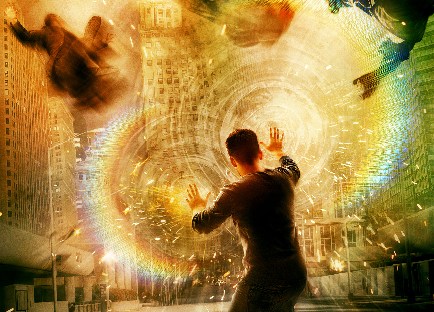
Pete Koslow (Joel Kinnaman) is a snitch for the FBI against the Polish mafia drug trade in New York. He is handled by Agent Wilcox (Rosamund Pike) and her boss, Montgomery (Clive Owen). Given the cast of this film, I expected better than it provides. I blame the script; it’s sawdust—a pile of uninspired blandness.

Joel Kinnaman does his best with his material, that is apparent. However, a snitch’s character is not original; going “undercover” in prison is not original or is selling drugs in one. Other films have done a much better job at recycling what amounts to a cliche. The only real save for this film is that it moves from one scene to another at a pace that makes it tolerable to watch in passing. 

When I look at the character development, it’s thin as ice, and you can see the cracks. There is an attempt at a family bond between Koslow, his wife (Ana de Armas), and their daughter. Still, the relationship is like fake furniture in a staged house. The mafia leader, his wife, and his head henchmen are devoid of any credibility in their respective roles, stereotypical or otherwise. For the latter, I can’t believe someone wrote characters that come across as such one-dimensional garbage. 

‘The Informer’ Official UK Trailer

Speaking of dimension lacking…Clive Owens character, Montgomery. This is a decent example of an actor taking on a project with little being asked of them while earning a paycheck. The opposite is true of Detective Grens (Common) of the NYPD, who has more to work with, but his position creates accountability questions. In an era where cops in America are disliked more than ever, I don’t know if Grens is meant to come off as a rogue cop or self-entitled, but it’s aggravating to watch. 

From start to finish, this film seeks purpose through an uninspiring story and an equally unsatisfying ending. The Informer is a B-level attempt at a crime, drama, thriller. That may be too gracious. For me, this film is an excellent example that just because I like the actors attached to a project doesn’t mean I’ll enjoy it. I’m glad I didn’t have to pay to see this movie. The only thing I lost by viewing it was my time and some brain cells. The trailer for this film is all you need to see. 

There are much better films out there to see if this type of genre appeals to you. Skip this one. You won’t miss out by leaving this off your watch list. 

—a pen lady 

Film Critic, Movie Blog, Movie Reviews

KON-TIKI (2012)

KON-TIKI (2012)

Directed by: Joachim Rønning, Espen Sandberg   Runtime: 1 hr 58 min   

Studio: Nordisk Film Production (released in the U.S. via the Weinstein Company)

Screenwriter: Petter Skavlan   Rating: PG-13

Cast: Pål Hagen, Anders Baasmo Christiansen, Tobias Santelmann, Gustaf Skarsgård, Odd-Magnus Williamson, Jakob Oftebro  

*Released domestically in November 2012 and as an international release in the United States in April 2013. (The U.S. version is about twenty-minutes shorter). An interesting fact about this movie’s production. Its scenes were shot first in Norwegian and then in English. So the actors did everything twice! 

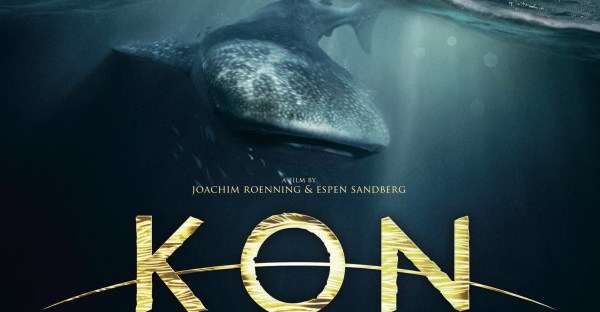
Movies like KON-TIKI are not action-packed blockbusters full of CGI and stunts to enthrall you. Its attraction lies in the story, the journey, and the wanderlust of times long gone, when things were still left in the world to be discovered. 

An explorer and adventurer named Thor Heyerdahl (Pål Hagen) spend the 1930s in Polynesia immersed in research on the natives and their origins. The world had taught, up till then, that the Polynesian islands were settled by travelers from Asia who traveled from West to East, and it couldn’t be any other way. Thor tries to sell other explorers and scientific publications on his theory that this isn’t true, but they all wave him off. 

Kon-Tiki Offical Trailer (English version) via YouTube/Movieclips Trailers

Not to be discouraged, Thor believes that if he proves his theory, he will change history. So he decides to travel across the Pacific and do just that.

Thor attracts Herman Watzinger (Anders Baasmo Christiansen), a refrigerator salesman who offers to join him. Later, after hearing of his quest, Thor is approached by Bengt Danielsson, an Ethnographer (Gustaf Skarsgård), to go along and film the journey. The six-man crew is rounded out by Knut Haugland (Tobias Santelmann) and Torstein Raaby (Jakob Oftebro) as the radio guys, and Erik Hesselberg (Odd-Magnus Williamson). Erik is a lifelong friend of Thor’s. He’s also the only one to ever have been out to sea.

The film dramatizes the real-life Thor Heyerdahl’s attempt to cross the Pacific Ocean on a balsa wood raft. So it is based on a true story. 

Watching KON-TIKI, the audience must remember that the story isn’t about character development (except perhaps Thor’s) or drama. There isn’t anything discernible that is learned about the crew. I have not read the book myself, so I’m assessing this just from a cinematic perspective. Usually, lack of character anything would bother me. However, it’s the relatively calm nature that is depicted that is so refreshing. No one acts like the sun has baked their brains for too long. It’s about the journey. How it will end, as all journeys do. Will they all make it? Will the raft hold up? The crew takes each day as it comes. As if they tossed a coin into the ocean of fate and left fear behind at the docks. I don’t know anyone who would be that insouciance about their lives. 

Kon-Tiki route. Image: The UK Times

Despite that, there is suspense in the film. They are in the middle of the ocean! With storms and wildlife to contend with, those external factors create natural obstacles and incidents which every story has. These factors enable smooth pacing to the days at sea and for the actors to actually do things. It’s done so well that the film never comes across as slow or uneventful. While watching, I never get the impression that something is overly done because it’s a movie, fictionalized though it may be. That’s important because it keeps with the fact that this journey really did happen once. 

This movie reminds me of something I might have watched in school after being assigned to read the book. Please, don’t let that put you off! This isn’t a typical movie or family movie night choice in America anyway. I was looking for other projects that Gustaf Skarsgård had done that I could watch here and came across this. It’s a good film to watch for movie night, a day off pick, or for a relaxing weekend stay indoors. Any well-crafted movie that enlightens me about something else in the world finds its way onto my watchlist. KON-TIKI is a perfect balance of entertaining, action, and real-life events that should grace your watchlist too. 

—a pen lady

Film Critic, Movie Blog, Movie Reviews

Ma Rainey’s Black Bottom (2020)

Ma Rainey’s Black Bottom (2020)

Directed by: George C. Wolfe Runtime: 1hr 34 min    Rated: R    Studio: Netflix

Screenwriter: Ruben Santiago-Hudson    Based on: August Wilson’s play

Cast: Viola Davis, Chadwick Boseman, Glynn Turman, Colman Domingo, Michael Potts 

The play Ma Rainey’s Black Bottom by August Wilson transitions to film through screenwriter Ruben Santiago-Hudson and stage director/playwright George C. Wolfe. 

While the music, locations, and clothes of the late 1920s transition well to screen, and why wouldn’t it, the plot to record a record in a sweltering recording studio one afternoon does not. It’s a pretext; this film is all about the characters. Every movie needs characters, true and well-developed ones, to engage a viewer’s interest. This project as a film fails at that miserably. 

Ma Rainey was a real-life woman that August Wilson based a 1982 play on. Ma became known as the “mother of blues” for her contributions and shaping of blues music during the early 1900s. Her sound and notable stage performance style made her the first known blues artist. For a woman during that time and a black woman, that was an accomplishment. Especially when the world had more issues with both those labels. She made a name for herself, a brand, and had a following. How this film presents her, however, is unflattering. 

Netflix Official Trailer for ‘Ma Rainey’s Black Bottom’

It’s fair to wonder if this movie’s choice of focus, a day-in-the-life-of take on Ma Rainey, is an accurate representation of her character or just a bad day. I think this woman deserves a film that can flesh her out better and give a more rounded take on her life and music. A movie should not have the audience asking themselves if it’s accurate; it should show it.

The failure to show it is because Wolfe and Santiago-Hudson stick to August Wilson’s uses of speeches too heavily. They forego the needed camera movements with the acting to show, not tell what’s going on. Choosing close-up shots and framing the actors standing around or sitting like they are on stage waste a cinematographers’ talent. This is supposed to be a movie, not a play. The entire film is a slow drag (no pun intended) that makes the runtime feel twice as long as it actually is. It’s based on a play and feels like one. 

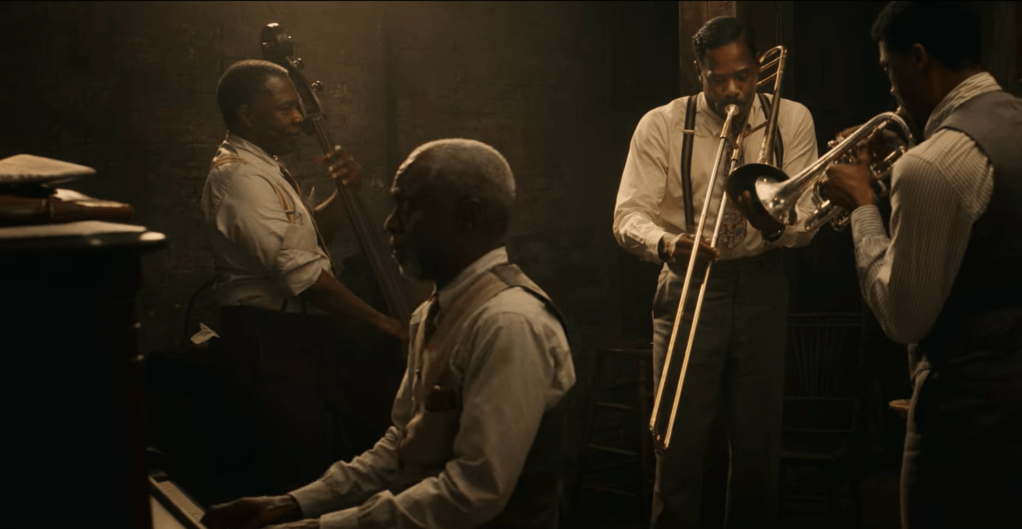
At the recording studio, all the audience is subjected to is heavy exposition. Talking. Lots, and lots, of speaking. The band members stand around, trash-talking, occasionally playing music, swapping stories, and being verbally abusive with nothing else to move the story along. It leaves the impression that Ma Rainey isn’t the mother of anything. Historically that’s not true, but this project doesn’t do much for the real-life person who earned that title. 

Ma Rainey’s band, in Netflix’s ‘Ma Rainey’s Black Bottom.’

Viola Davis is an incredible actress with great depth and range. Still, the depiction of Ma Rainey makes me cringe as Ma comes off so unlikeable. Maybe she was in real life. I am left with the impression that Ma is always a bitch and learn little of consequence about her. Ma’s demeanor is understandable towards white people. Mainly because it’s useful to keep control and stay successful in a white, male-run world. Yet, she’s just as mean and snobby to the black people around her. 

Chadwick Boseman was undoubtedly a talented actor as well. His character, Levee, grates at Ma’s nerve. Levee is young, ambitious, and loves music like Ma and dreams of having his own band, so he doesn’t have to play the same old music anymore. He’s arrogant and misogynistic. Ma and Levee are so similar it’s obvious why they don’t get along, and it makes me wonder how he ever ended up in her band in the first place.

Wilson’s use of monologuing is where the viewer gets any relevant information about the characters. While there is a lot of information and perspective to be gained from these moments about Levee, Ma, and the rest of the band, it’s not enough. 

I enjoy a good play, and perhaps I would have gotten more out of this material if I had seen it as such. You can’t lose what you don’t have, and this film didn’t have cinematic structure story-telling. The interactions of the characters’ speeches alone are not enough; it makes the movie boring and does nothing for music or the blues in a memorable way. 

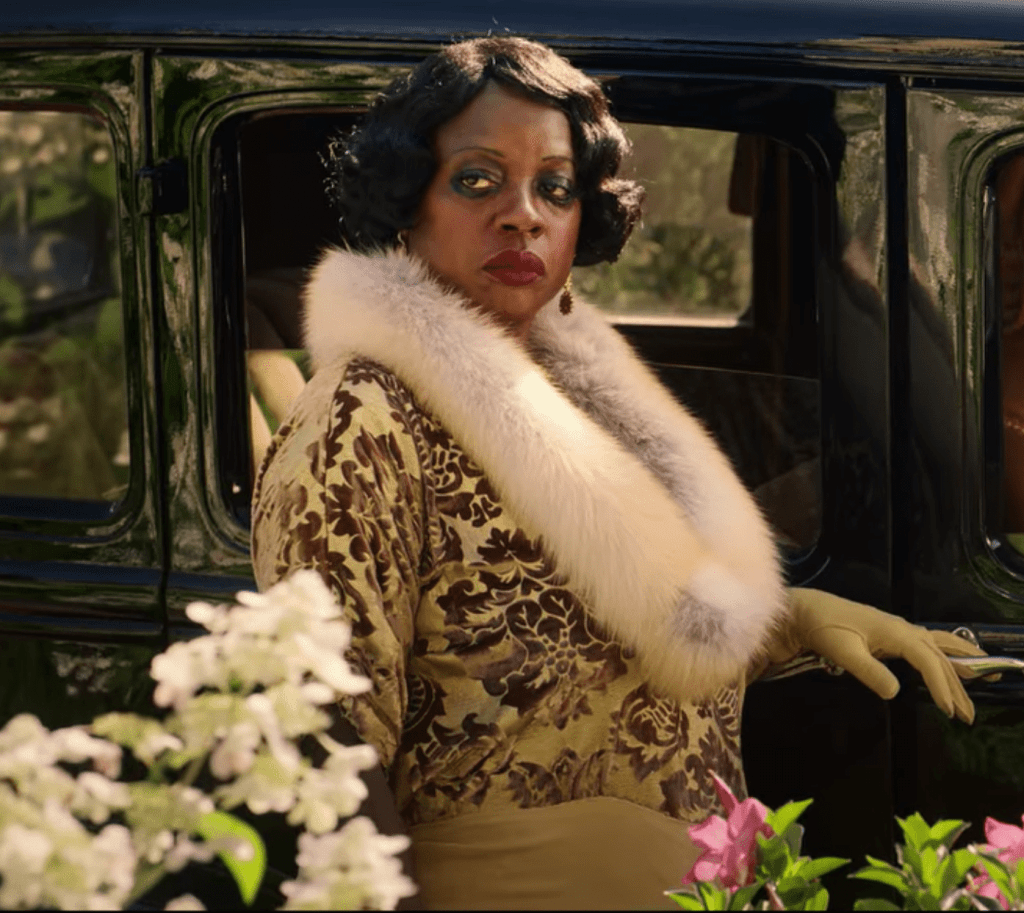
Viola Davis is Ma Rainey in Netflix’s ‘Ma Rainey’s Black Bottom’

Circling back to Levee’s character…as a devil’s advocate. Chadwick Boseman has been given so much praise for this role. He took on this project knowing he had cancer and didn’t tell anyone. Boseman certainly wasn’t the first actor/actress to work on a project with cancer or during treatments. So I’m conflicted as to if he has gotten this praise because it was a great job or because he died and his peers all loved him. That sounds terrible, I know. If an actor is saying lines that run parallel to their actual life, in an emotional state. Is it really acting, or is it life imitating art? If he hadn’t died, would the same praise be there? 

This film touches on important topics, like cultural appropriation, intellectual property rights and theft, sexuality, and multi-layered race issues. These could have been shown on film rather than talked about. It would have enabled the story with much need pacing.

Still, the trailer for this film was the best thing about it. It implied more about blues or music than is actually experienced. Due to its lack of effective adaptation to film, I would not recommend this for your watch list. 

—a pen lady

Film Critic, Movie Blog, Movie Reviews

Arrival (2016)

Arrival (2016)

Directed by: Denis Villeneuve Runtime: 1 hr 56 min Rated: PG-13 Studio: Paramount Screenwriter: Eric Heisserer Based on: Story of Your Life, 1998 short story by Ted Chiang Cast: Amy Adams, Jeremey Renner, Forest Whitaker 

Arrival is a cerebral experience that delivers a compelling sci-fi story with novel ideas through minimal CGI, well-edited sound, and strong performances by the cast. 

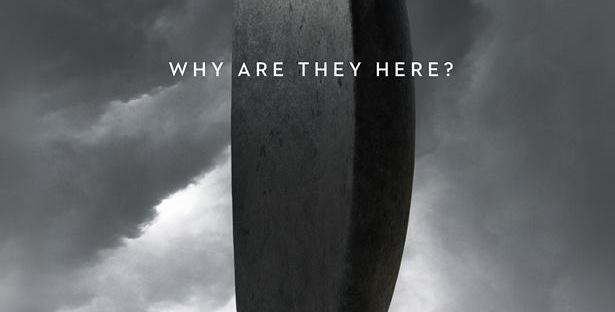
Twelve alien crafts suddenly arrive on Earth in places all over the globe. Top translation linguist Professor Louise Banks (Amy Adams) is…requisitioned by the U.S. Army to help communicate with these beings and find out why they came. Dr. Banks is aided by Dr. Ian Donnelly (Jeremy Renner), a theoretical physicist.  

Two key points I found refreshingly novel compared to other alien films involving the military were: they put in a woman in charge, and they listened. In many professions, women are not at the top or even respected for the work they do. Chiang’s choice for a female lead, believably, drives the story forward. The studio’s version could have changed that but did not. Second, the American military could have listened and taken a ‘we’ll take that under consideration’ mentality to Dr. Banks’s assessment. Instead, more or less, she was permitted to work without interference. 

The military wants answers as quick as possible before another country starts shooting. Knowing that and trying to communicate correctly with a species you don’t understand… is a lot of pressure. In numerous films, the military person in charge is a hard ass, which would not fit this movie’s tone. Colonel Weber (Forest Whitaker) is the man in charge of operations. Forest Whitaker naturally projects a strong authority of presence without trying. His calm assertiveness and respectful demeanor when things are explained to him is a great example of why patience in this film is so important. It’s one of the main themes. 

Amy Adams delivers a grounded performance that is nothing short of graceful. She (Dr. Banks) is learning an alien language, teaching English-under the military’s eye, while processing some intensely personal events. She never misses a beat.

Why is it that alien movies with potential global destruction are what it takes to make the world work together and share information? Teams like Dr. Banks and Dr. Donnelly’s are also in contact with their local alien ships. How and why all these teams choose to communicate the way they do should remind us that one way isn’t the only way. 

Forest Whitaker, Amy Adams, and Jeremy Renner in Paramount Pictures ‘Arrival’ via Vox.com

The subtle nods to the other teams and the world’s reaction to finding out aliens are real are very believable. It helps with scene transitions and story progression. Some of the scenes may be confusing as more about the aliens are discovered: how they travel, how they view time, their belief of the notion of fate, and language itself. I did say this movie is a cerebral experience. 

The authentic responses to the alien’s arrival are as intense emotionally as it is mentally. The alarms and subsequent evacuation of students from campus are relatable to me, as I’m sure it is for many. (It’s in the trailer, so I’m not spoiling anything). Who doesn’t remember how they felt when they learned the news of something huge? A war starting, a natural disaster wiping out places, the assassination of someone? For me, it was being in a college lecture hall on 9-11. It’s not the arrival of aliens, but there is a relatable sense of anxiety and dread. Scenes like this, created to resonate with the viewer, enable the filmmakers to craft a film with much less CGI than most sci-fi pictures.

Another cerebral form is physics. I’ve said in another review that I don’t do physics, it’s still true. However, when watching this film, pay attention to the comments about the ship’s design, how they move, and the energy they put out. For such a large object, my thought was, that’s one green ship! I don’t know if that was intentional. Still, I think it says a lot about this alien species and their intellect without explaining anything more. I reviewed the 2012 film Prometheus, and a ship in that film is similar to those in this one. Both are a nice departure from how other spacecraft are depicted. 

Amy Adams is Louise Banks in Paramount Pictures, ‘Arrival’ via Times.com

Ted Chiang created this alien language, and it was further fleshed out when adapted to the screen. It became a believably functional, artful, and original depiction of a language not based on our own. That takes immense creativity and understanding. When Dr. Banks learns enough of their language to understand their purpose on Earth, well, it’s absurd for real life, but for a movie? Sure. Go with it. 

If you don’t like to think when watching a film and want everything spelled out for you, this film is not for you. If movies like Alien and Independence Day are more your thing, this movie will disappoint you on multiple levels. If, however, you enjoy a great sci-fi story with good acting and original perspective, you should put this film on your watch list. 

—a pen lady

2-23-21

Film Critic, Movie Blog, Movie Reviews

The Trial of the Chicago 7 (2020)

The Trial of the Chicago 7 (2020)

Directed by: Aaron Sorkin      Runtime: 2hr 10 min     Rated: R     

Studio: Netflix, Cross Creek pictures, Dreamworks     Screenwriter: Aaron Sorkin

Cast: Eddie Redmayne, Sacha Baron Cohen, Yahya Abdul-Mateen II, Frank Langella, Joseph Gordon-Levitt, Mark Rylance

The Trial of the Chicago 7 by Aaron Sorkin is one of those films that seeks to have the audience ask, ‘what do I feel?’ 

I wasn’t around back then, but the Vietnam war was raging. Dr. Martin Luther King Jr. and Robert F. Kennedy were both assassinated that year. The Chicago riots happened, and Nixon was elected president. 

Put aside your own political leanings for a moment. This movie follows, loosely, seven men leading up to the 1968 Democratic National Convention (DNC) in Chicago, Illinois. They all start out trying to get permission from the city to assemble thousands of people from multiple states in the park across from where the DNC will be. Their various paths go from there, which the movie shows, to let the viewer see how and why they all end up in court for inciting a riot. 

Now, there was a real “trial of the Chicago 7” in 1969. This film is based on that. 

The seven on trial were:

1. Lee Weiner (Noah Robbins) 2. John Froines (Danny Flaherty) 3. David Dellinger (John Carroll Lynch) -Leader of the Mobilization to End the War in Vietnam (The Mobe).  4. Jerry Rubin (Jeremy Strong) and Abbie Hoffman (Sacha Baron Cohen) -Leaders of the Youth International Party (Yippies). 5. Rennie Davis (Alex Sharp) and Tom Hayden (Eddie Redmayne) -Leaders of the Students for a Democratic Society (SDS).

The trial itself lasted almost five months. In all that time, an eighth man was attached to this trial for less than a month for no other reason than he was black, which would intimidate the jury. His name was Bobby Seal (Yahya Abdul-Mateen II), the leader of the Black Panther Party. This whole section will have you exploring how you feel. The rationale for the eight being on trial was blood boiling enough, but the treatment Bobby Seal was subjected to and endured during the trial is a story of its own. Mateen does a great job in his portrayal, short though his involvement was. 

Netflix Offical Trailer for ‘The Trial of the Chicago 7’

So the film seems believable, being adapted well from actual events, as far as I can tell. The ensemble of defendants were activists from differing walks of life. People fed up with the system, racism, corruption, and the war in Vietnam. They wanted to peacefully march and protest with bands playing music in the park. While this film could have done a better job at highlighting the attempts at the “peaceful” components of the real-life events, you do see it. Each character has a bit of a moment to show you who these men were, though Weiner and Froines are hardly heard from, as they were patsies in real life. 

Sacha Baron Cohen doesn’t just look like Abbie Hoffman; Cohen naturally comes off as him. Rubin and Hoffman were like performance artist-activists, or so I read, and it’s not a stretch to see Cohen standing on a stage and delivering pot-shot commentary on the trial. Rubin seems like a man of action in handling certain situations, and Jeremy Strong is believable as much. (I have good examples, but that would spoil things). The scenes with Hoffman and Rubin really help to break up the otherwise impertinent tone of events. 

In great contrast to Rubin and Hoffman was David Dellinger, a pacifist. He’s mainly quiet, and when you hear him, it reminded me of a parent chaperoning a field trip that no one listens to. 

Rennie Davis and Tom Hayden are the quieter, well-spoken of the group. Throughout the trial, Rennie’s actions weaved like a needle and thread. Serving as a reminder of why they all went to Chicago. Well-intended as Hayden might have been for taking his group, the SDS, to Chicago in 1968, he was kind of a tosser. While Eddie Redmayne is a talented actor, this is a static role for him and does nothing to highlight his abilities. 

To highlight something for my non-American readers, a person is supposed to be innocent until proven guilty in this country. And yet, five decades later, the judicial system is still a stage for those with power who are corrupt, absolute. Judge Hoffman, played by Frank Langella, was the living embodiment of all the things you don’t want in a judge. Langella depicts Hoffman accurately (so I’ve read), which angers me but doesn’t surprise me that such a cankerous bigot would be in such a position. Especially in Illinois. 

Netflix’s ‘Trial of the Chiago 7’ image via the Chicago Sun-Times, 10/20

Frank Langella and Sacha Baron Cohen are the two characters who really make the film worth sticking around for, aside from Yahya Abdul-Mateen II portions. Without them, the scenes of the actual riots, and the use of original footage, this film would be a snooze-fest. 

While this movie is undoubtedly watchable, it could have been better if Aaron Sorkin hadn’t written and directed it. Someone else should have directed it. Sorkin peppers in real-life quotes with his sharp writing, which works, if a bit unbelievable. 

The real trial of 1969 had people chanting, “the whole world is watching,” every day. At the time, there would have been no way to forget that this trial was about men opposed to the Vietnam war. When watching this movie, I was distracted from that. Distracted by the obtuse, bigoted, racists, arrogance on display in the courtroom. The overreaction of the Mayor of Chicago turning his city into a police state. All the events in response to the anti-war protests in Chicago in Sorkin’s dramatization overshadowed the Vietnam war itself. For everyone who wasn’t alive at the time watching this, it minimizes the seriousness of the national objection to the war in Vietnam. That is a disservice to history. 

It’s a good movie for a streaming service release; after spending only a few in actual theaters because of Covid. I don’t think this would have done very well at the box office. Still, it is a good introduction to a topic or about real-life moments in history to have a conversation on; to ask what you would do if you were the one on trial. For that reason, you could add it to your watch list.  

—a pen lady

Film Critic, Movie Blog, Movie Reviews

Alien: Covenant (2017)

Alien: Covenant (2017)

Directed by: Ridley Scott     Runtime: 2 hr 3 min     Rated: R    

Studio: 20th Century Fox     Screenwriters: John Logan, Dante Harper

Cast: Michael Fassbender, Katherine Waterston, Danny McBride, Billy Crudup

Ridley Scott’s Alien: Covenant is the follow-up to his 2012 Prometheus prequel of his Alien franchise. Set ten years later, in 2104, Covenant follows a crew of 15 onboard a Weyland Group colonization vessel bound for a planet still several years away. 

Micheal Fassbender reprises his role as a ship android, this time named Walter. He and “mother” the ship’s computer, watch over the crew and 3,100 colonist and embryos asleep in stasis pods. Things in space movies never go as planned, and Covenant is no different. Walter is forced to wake the crew early to deal with the instigating event. 

The Covenant characters’ dynamic is much different from Prometheus; right after waking up, they all work to fix problems. This cohesion was not in the previous film, nor was any semblance of rank, security protocols, or notion that anyone had ever been in space before. Right away, I appreciate these things because whether a mission is from a company or military group, things happen in space, and there needs to be guidelines and structure. 

It’s obvious that this crew has worked together before, and there is history. It is a colonization journey, so I can let go of the fact that almost the entire crew is paired off already with someone. I think of the Netflix show Lost in Space, and I know that dynamic can be done well. This isn’t as good as that, but it’s not terrible. That history, understanding, is what gets the crew off course from their intended destination. After spending a decade researching and verifying a planet can be colonized, I find it ridiculously unbelievable a crew would abandon that on a whim. They still have a job to do. This isn’t Star Trek. 

Still, the characters are performed well, considering the interaction and story you get with some in a thriller movie like this. Katherine Waterston plays Daniels, second in command of the Covenant. Waterston’s character reminds me of Sigourney Weavers Ridley from the original Alien films. She has a strong presence, good leadership, and the right mix of ‘I can handle this and be scared at the same time.’ 

20th Century Studios Offical Trailer for Alien: Covenant via YouTube

The film’s pace is better than the last, and the scenes flow well from one to the next. Scene transition gets really important in the latter part of the film when Fassbender and Waterston’s characters learn more about the planet they are exploring.  

While Ridley Scott answers the question of what brings the Covenant to this planet with sound logic and justification, that’s where it ends. The backstory provided only serves to raise more questions and frustrations stemming from Prometheus’s introduction to the “Engineers.” Don’t worry though Covenant brings out the egg-pods, the face-huggers, xenomorphs, blood, gore, and running like its founders. The film has the suspense and thriller aspect closer to the originals than Prometheus, so fans shouldn’t be too disappointed.

There are many unanswered questions between these first two prequels that I wish Ridley Scott had done more to answer in this film. The cliffhanger those unanswered questions leave- lingers too much after two films. Scott’s master plan was to have three prequel films to connect the Alien’s origins with the original franchise. The third film may never be made. Covenant’s box office sales were disappointing. Then, Disney acquired the Alien franchise in 2019, and 2020 obliterated the film industry. I hope the film gets made and that Ridley Scott finally answers the questions he has raised so far. The fans deserve closure. 

Despite all those issues and unanswered questions, Alien: Covenant is a good if under-appreciated film worthy of being put on your watch list. 

—a pen lady